2026-03-10
Plastic kids furniture is often marketed as lightweight, colorful, and affordable, making it an attractive option for families at first glance. However, as furniture becomes part of a child’s everyday routine, many U.S. parents begin to question its long-term value. Plastic stools and chairs can tip easily when children climb, lean, or shift their weight. With daily use, plastic materials may crack, warp, or weaken at connection points, reducing stability and safety over time. Stains from food, paint, or markers are also common and difficult to remove, causing furniture to look worn long before a child outgrows it.
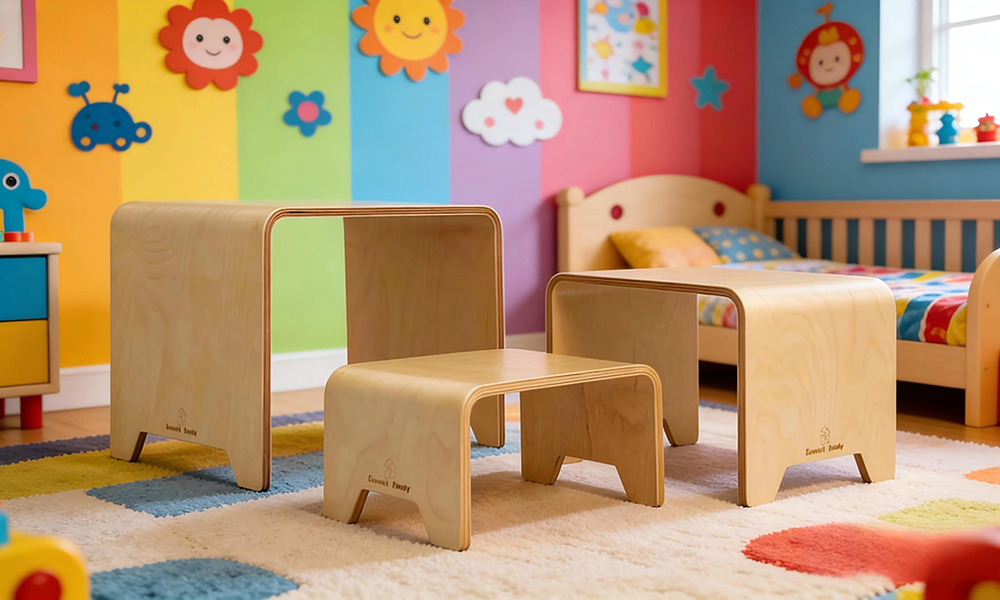
Wooden furniture offers a noticeably sturdier alternative. Wooden stool sets, especially those made with bentwood construction, provide enhanced stability through their curved structure, which distributes weight evenly and reduces stress on joints. Smooth edges and solid surfaces make wooden stools more comfortable and secure for young children who are still developing balance and coordination. Unlike plastic, wood maintains its strength under repeated use and feels grounded rather than flimsy.
Durability is one of the most important advantages of wooden furniture. A well-crafted wooden stool maintains its shape and function for years, even in busy households. Instead of deteriorating, wood ages gracefully, developing character while remaining structurally sound. This longevity makes wooden furniture a practical choice for families who prefer fewer replacements and better overall value.
For families focused on safety, sustainability, and long-term performance, wooden Montessori-inspired furniture is a thoughtful investment. It supports real childhood activity—climbing, sitting, playing, and learning—while becoming a reliable part of daily family life rather than a temporary solution.
Find Damoch Family on Amazon.